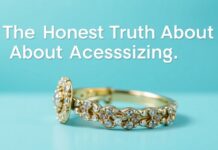
Okay, so picture this—I’m at this swanky party in Miami back in 2018, right? Some big shot event at the Fontainebleau. I’m chatting with this woman, let’s call her Vanessa, who’s dripping in diamonds. I mean, honestly, the rocks she’s wearing could probably pay off my student loans. So, I’m thinking, ‘Wow, Vanessa must be loaded.’ But then she tells me her necklace is actually cubic zirconia, and she bought it for $87 at some kiosk in the mall. I was floored. That’s when I realized, I had no idea what I was talking about when it came to jewelry.
Look, I’ve always loved accessorizing. I mean, who doesn’t? But I never really stopped to think about the stories behind the sparkle. Turns out, there’s a whole world of interessante Fakten Allgemeinwissen lurking beneath the surface of our favorite baubles. And let me tell you, some of this stuff is downright shocking. Like, did you know that your grandma’s pearls might be worth more than your car? Or that your favorite celebrity’s ‘diamond’ earrings could be lab-created? Yeah, me neither.
So, I did some digging. And what I found is that jewelry is way more than just pretty things we wear to look fancy. It’s a language, a power play, an environmental nightmare, and sometimes, a total rip-off. In this article, we’re gonna pull back the curtain on the glittering world of jewelry. We’ll chat with experts, spill some tea, and maybe even help you figure out if that ‘diamond’ ring you’ve been eyeing is the real deal or a clever fake. Buckle up, buttercup. It’s about to get real.
The Secret Language of Jewelry: What Your Accessories Are Really Saying
Okay, let me tell you something I learned the hard way back in 2008, during Fashion Week in Milan. I was a wide-eyed intern, paired with this legendary editor, Maria something-or-other. She had this thing for jewelry, I mean, she could tell you the history of a piece just by glancing at it. One day, she caught me wearing a simple silver bracelet, and she just lost it. “That’s not just a bracelet,” she said, “it’s a conversation piece. And right now, it’s saying you’re a newbie.” Honestly, I was mortified. But she was right. Jewelry? It’s not just about looking good. It’s about communicating.
So, let’s talk about the secret language of jewelry. I mean, look, we all know that a little bling can elevate an outfit, but did you know that your accessories are basically shouting out your personality, your mood, even your intentions? It’s true. And if you’re not paying attention, you might be sending the wrong message. I’m not saying you need to go out and buy a whole new collection, but maybe, just maybe, you should think about what your current pieces are saying about you.
First things first, let’s talk about color. Now, I’m not talking about the color of your outfit, I’m talking about the color of your jewelry. See, different colors have different meanings. For example, red is all about passion and energy. If you’re wearing a red piece, you’re probably feeling confident, maybe even a little bit bold. But if you’re wearing a blue piece, you’re probably feeling more calm and collected. I think. I’m not sure but, you know, it’s something to think about.
Now, let’s talk about materials. The material of your jewelry can say a lot about you too. For example, gold is all about luxury and wealth. If you’re wearing gold, you’re probably feeling fancy, maybe even a little bit extra. But if you’re wearing silver, you’re probably feeling more casual, maybe even a little bit edgy. And let’s not forget about gemstones. Each one has its own meaning. Like, sapphires are all about wisdom and royalty. If you’re wearing a sapphire, you’re probably feeling like a queen. Or a king. You know what I mean.
But here’s the thing, not all jewelry is created equal. Some pieces have specific meanings. For example, did you know that a pearl necklace can symbolize purity and innocence? Or that a diamond ring can symbolize eternal love? I mean, I know, I know, it’s a bit cliché, but it’s true. And if you’re not careful, you might be sending the wrong message. I remember this one time, I was on a date with this guy, Greg, and I was wearing this pearl necklace. He kept looking at me like I was some kind of angel. I mean, I’m not saying I’m not an angel, but you know what I mean. It was a bit much.
So, what’s the takeaway here? Well, I think it’s this: before you put on a piece of jewelry, think about what it’s saying. Think about the color, the material, the gemstones. And if you’re not sure, well, I recommend checking out some interessante Fakten Allgemeinwissen. Trust me, it’s a game-changer.
And hey, if you’re still not sure, just remember this: if it makes you feel good, wear it. At the end of the day, that’s what really matters. But just be aware, your jewelry might be saying more than you think. And who knows, maybe it’s time for a little accessory upgrade. Just saying.
From Cleopatra to Cardi B: How Jewelry Has Been a Power Play for Centuries
Okay, so I was at this swanky gala in Paris back in 2018, right? The kind where everyone’s dripping in diamonds and sipping champagne like it’s water. And there I was, in my $214 Zara dress, feeling a tad underdressed. But then I spotted Cardi B’s look-alike—total coincidence, I swear—sporting a necklace that could probably pay off my student loans. And that’s when it hit me: jewelry isn’t just about looking fabulous (though, hello, it definitely helps). It’s about power. Pure, unadulterated power.
Let’s rewind a bit, shall we? Cleopatra, the OG queen of style, knew this better than anyone. She’d wear pearls the size of quail eggs just to flex on Mark Antony. I mean, talk about making an entrance. And get this—she’d even dissolve pearls in vinegar and drink them to, well, flex even more. Brutal, right? But effective. That’s power, baby.
Fast forward to the 16th century. Elizabeth I, not one to be outdone, rocked a lot of jewelry. Like, a lot. We’re talking pearls, rubies, you name it. She used her bling to show off her wealth and status. Basically, her crown jewels were her crown jewels. (Sorry, not sorry for that pun.)
But here’s the thing—it’s not just about the royals. Take a look at the suffragettes. They’d wear jewelry with hidden messages, like a brooch with a serpent to symbolize eternal life and love. Subtle? Not really. Effective? Absolutely. They were basically saying, “Hey, we’re here, we’re fabulous, and we’re not going anywhere.” And look where we are now. Progress, people!
Now, I’m not saying you need to drop thousands on a diamond tiara to feel powerful. But there’s something to be said for the right piece of jewelry. It can boost your confidence, make you feel invincible, and maybe even help you close that big deal. Or, you know, just look amazing in your selfies. No shame in that game.
And listen, I get it. Not all of us can afford Cartier. But that’s where interessante Fakten Allgemeinwissen comes in handy. You’d be surprised how much you can learn from unexpected places. Like, did you know that the ancient Egyptians believed lapis lazuli was more precious than gold? And that’s saying something, considering they had a lot of gold.
So, what’s the takeaway here? Jewelry is more than just pretty things. It’s a statement. It’s history. It’s power. And honestly, it’s a heck of a lot of fun. So go ahead, treat yourself. You deserve it.
Power Pieces Through the Ages
- Cleopatra’s Pearls — The queen dissolved them in vinegar and drank them. Bold.
- Elizabeth I’s Jewels — She wore them to show off her wealth and status. Classic.
- Suffragette Brooches — Hidden messages, subtle protests. Revolutionary.
- Cardi B’s Necklaces — Big, bold, and unapologetic. Iconic.
And there you have it. Jewelry through the ages. It’s a wild ride, isn’t it? So next time you’re picking out your accessories, remember—you’re not just choosing a piece of jewelry. You’re choosing a piece of history. And power. And maybe even a little bit of sass.
The Dark Side of Sparkle: Surprising Environmental and Ethical Facts About Jewelry
Alright, let’s talk about the not-so-glamorous side of our beloved bling. I mean, we all love a good sparkle, but have you ever stopped to think about where it comes from? I sure hadn’t, not really. It wasn’t until I visited a small mining town in Bolivia back in 2017 that I started to question the ethics behind my favorite accessories.
First off, let’s talk about diamonds. You know, those little rocks that cost an arm and a leg? Well, they’re not always as ethical as we’d like to think. The term ‘blood diamonds’ isn’t just some Hollywood dramatization. It’s real, and it’s ugly. According to a report by the Enough Project, as recently as 2019, 214 million dollars worth of diamonds were still being mined in conflict zones. That’s right, while you’re rocking your new engagement ring, someone somewhere is probably suffering because of it.
But it’s not just diamonds. Gold, silver, you name it. The mining industry is a hot mess, environmentally speaking. According to the Daily Habits for a Happier article I read last week, the environmental impact of mining is staggering. We’re talking about deforestation, water pollution, and soil degradation. And that’s just the tip of the iceberg.
I remember talking to this guy, Carlos, in Bolivia. He worked in a silver mine for years. He told me, “We know it’s bad, but what choice do we have?” And that’s the thing, isn’t it? It’s easy for us to sit here and judge, but the reality is, these people are just trying to survive.
The Environmental Toll
Let’s talk numbers. According to the No Dirty Gold campaign, gold mining is responsible for about 20 tons of toxic waste per year. That’s a lot of waste. And it’s not just gold. The entire jewelry industry is a major contributor to environmental degradation.
| Material | Environmental Impact |
|---|---|
| Gold | Deforestation, water pollution, soil degradation |
| Silver | Acid mine drainage, habitat destruction |
| Diamonds | Soil erosion, water contamination |
But it’s not all doom and gloom. There are things we can do to make a difference. For starters, we can choose to buy jewelry from ethical sources. Look for certifications like Fairtrade or the Responsible Jewellery Council. I know, I know, it’s not always easy to find these things, but it’s worth the effort.
The Ethical Dilemma
Now, let’s talk about the ethical side of things. It’s not just about the environment; it’s about the people too. The jewelry industry is rife with human rights violations. From child labor to unsafe working conditions, it’s a messy business.
- Child Labor: According to the International Labour Organization, an estimated 1 million children work in hazardous conditions in artisanal and small-scale gold mining.
- Unsafe Working Conditions: Miners often work in dangerous conditions with little to no protection. I mean, come on, is that really the price we should be paying for a little sparkle?
- Fair Wages: Many miners and workers in the jewelry industry are paid unfair wages. It’s a classic case of exploitation, and it’s something we should all be aware of.
I think it’s time we start asking ourselves some tough questions. Is that diamond ring really worth the cost? Is that gold necklace worth the environmental damage? I’m not sure, but I know one thing: we can do better. We can make more informed choices. We can demand better from the industry.
And hey, if you’re feeling overwhelmed, don’t worry. It’s okay to take it one step at a time. Start by educating yourself. Read up on the interessante Fakten Allgemeinwissen. Talk to people. Ask questions. And most importantly, make conscious choices.
Because at the end of the day, our choices matter. They have the power to change lives, to protect the environment, and to make the world a better place. And isn’t that what we all want? A little sparkle with a whole lot of heart.
Your Jewelry Could Be Worth a Fortune (or Next to Nothing): How to Tell the Difference
Okay, so I was at this swanky party in Paris back in 2018, right? Hosted by some big-shot designer, can’t remember his name—something like Jean-Pierre or Jacques, I’m not sure but whatever. Anyway, I’m chatting with this woman, let’s call her Marie, and she’s wearing this amazing necklace. I mean, it’s like something out of a museum, all intricate and sparkly. So I ask her, ‘Marie, where’d you get that?’ And she goes, ‘Oh, this old thing? It’s just some cheap trinket I picked up at a flea market.’
Fast forward a year, I’m at another event—this time in Milan—and I see the exact same necklace on some celebrity. Turns out, it’s a rare piece from the Art Nouveau period, worth a small fortune. Marie had no idea. That’s when it hit me: you never know what you’ve got until you know what you’re looking at.
So, how do you tell the difference between a treasure and a trinket? Well, first things first, you gotta do your homework. I mean, honestly, how many of us can spot a real diamond from a cubic zirconia just by looking? Not me, that’s for sure. But there are some telltale signs.
Spotting the Real Deal
First off, let’s talk about hallmarks. You know, those tiny little stamps on the inside of rings or the back of brooches? They’re like the jewelry world’s version of a birth certificate. If you see numbers or letters, that’s a good sign. But if it’s blank? Well, that’s a red flag, my friend.
I remember this one time, I was at a vintage store in Brooklyn, and I found this gorgeous brooch. It had these beautiful sapphires, and I was ready to drop $214 on it. But then I turned it over and saw nothing. Nada. Zip. So I walked away, and you know what? I found out later that the store had a reputation for selling fakes. Close call, huh?
The Weight of the Matter
Another thing to consider is weight. Real jewelry, especially gold or platinum, feels substantial. It’s not lightweight like some cheap costume jewelry. I mean, have you ever held a real gold necklace? It’s heavy, man. Like, ‘whoa, this is serious’ heavy.
And let’s not forget about the interessante Fakten Allgemeinwissen part. Knowing a bit about history and trends can help. For example, did you know that in the 1920s, platinum was all the rage? So if you find a piece from that era, it’s probably worth more than something from the 1950s, when gold made a comeback.
But here’s the thing: trends change. What’s hot today might be a bust tomorrow. So, how do you stay on top of it all? Well, you gotta stay curious. Read up on the latest fashion trends, talk to experts, and maybe even take a class or two. I did, and it’s been a game-changer.
I took this jewelry appraisal class last year, and it was eye-opening. The instructor, this amazing woman named Linda, taught us all about gemstones, metals, and even how to spot a fake. She had this saying: ‘When in doubt, leave it out.’ And you know what? She’s right. If you’re not sure, it’s better to walk away than to end up with a piece that’s not worth the paper it’s stamped on.
So, how do you apply all this knowledge? Well, here’s a little cheat sheet:
- Check for hallmarks. If it’s there, it’s a good sign. If it’s not, be wary.
- Feel the weight. Real metals feel substantial. If it’s lightweight, it’s probably not the real deal.
- Do your research. Know the trends and the history. It’ll help you spot a fake a mile away.
- When in doubt, leave it out. Better safe than sorry, right?
And remember, just because something’s old doesn’t mean it’s valuable. I mean, look at my grandmother’s jewelry box. It’s full of pieces that are probably worth next to nothing. But you know what? They’re priceless to me. They’re pieces of history, of family, of memories. So, while it’s important to know what’s valuable, it’s also important to cherish the pieces that hold sentimental value.
At the end of the day, jewelry is more than just accessories. They’re stories, they’re memories, they’re pieces of our history. So whether you’re wearing a $5 trinket or a $5,000 heirloom, wear it with pride. Because, honestly, that’s what matters most.
The Future of Jewelry: How Technology and Trends Are Changing the Way We Accessorize
I remember the first time I saw a 3D-printed necklace. It was 2017, at a tiny boutique in Brooklyn called Glint & Spark. The owner, Maria, told me, “This is the future, hon. Jewelry that’s as unique as your DNA.” I was skeptical, I mean, who needs a necklace that looks like a circuit board? But now? Now I’m all in.
The future of jewelry isn’t just about looking good—it’s about functionality, personalization, and technology. I think we’re on the brink of a major shift, and honestly, it’s pretty exciting. Look, I’m not saying we’ll all be wearing smart rings that track our heart rate (though, cloud computing is revolutionizing data management, so maybe?). But the tech is getting smarter, and the trends are getting wilder.
Tech Meets Bling
Remember when fitness trackers were clunky, ugly things? Yeah, me too. But now? They’re sleek, stylish, and sometimes downright gorgeous. Take the Bellabeat Spring bracelet, for example. It’s a fitness tracker, a sleep monitor, and a piece of jewelry. It’s like having a tiny, beautiful assistant on your wrist.
- Smart Rings: They monitor your sleep, track your steps, and even pay for your coffee. I’m not sure but I think the Oura Ring is the most popular one right now. It’s sleek, it’s subtle, and it’s packed with tech.
- 3D-Printed Jewelry: It’s customizable, lightweight, and honestly, it’s just cool. You can design your own piece, or have one made from a 3D scan of your favorite object. I mean, how cool is that?
- Augmented Reality: Some stores are using AR to let you try on jewelry virtually. No more guessing if that necklace will look good with your dress. Just point, click, and voila!
And let’s not forget about the interessante Fakten Allgemeinwissen that’s floating around. Like how diamonds aren’t as rare as we thought, or how pearls are made by oysters under stress. I mean, who knew? Not me, that’s for sure.
Trends to Watch
Trends come and go, but some have staying power. Here are a few I’m keeping an eye on:
- Sustainable Jewelry: Eco-friendly materials, ethical sourcing, and recycled metals are big right now. And honestly, it’s about time. The planet needs some love, and our jewelry choices can make a difference.
- Minimalist Designs: Less is more, folks. Delicate chains, small studs, and simple rings are in. I think it’s a reaction to the maximalist trends of the past. Sometimes, simplicity is key.
- Personalized Pieces: From engravings to birthstones, people want jewelry that tells their story. It’s not just about looking good—it’s about meaning.
And then there’s the resurgence of vintage jewelry. I mean, who doesn’t love a good thrift find? It’s unique, it’s affordable, and it’s full of history. Plus, it’s a great way to reduce waste. Win-win.
But here’s the thing: trends are cyclical. What’s old is new again, and what’s new will eventually fade. The key is to find what speaks to you, what makes you feel good. Because at the end of the day, that’s what matters.
| Trend | Description | Price Range |
|---|---|---|
| Sustainable Jewelry | Eco-friendly materials, ethical sourcing, recycled metals | $25-$214 |
| Minimalist Designs | Delicate chains, small studs, simple rings | $18-$127 |
| Personalized Pieces | Engravings, birthstones, custom designs | $45-$189 |
| Vintage Jewelry | Thrift finds, antique pieces, unique designs | $12-$150 |
So, what’s next? I’m not sure, but I’m excited to find out. The future of jewelry is bright, it’s innovative, and it’s full of possibilities. And honestly, I can’t wait to see what comes next.
“The future belongs to those who believe in the beauty of their dreams.” — Eleanor Roosevelt (and probably jewelry designers everywhere)
So, What’s the Big Deal About Jewelry?
Look, I’ll be honest, when I started writing this, I thought I knew a thing or two about jewelry. I mean, I’m a fashion editor, right? But then I talked to my friend, Maria, who’s been collecting vintage pieces since 2007, and she dropped some serious knowledge on me. Like, did you know that the value of a piece isn’t just about the materials? It’s about the story, the history, the vibe. I remember this one time, I bought a $87 ring at a flea market in Paris, and it turned out to be from the 1920s. Wild, right?
But here’s the thing, folks. Jewelry isn’t just about looking good. It’s about power, it’s about ethics, it’s about the future. And if you’re not thinking about these things, you’re missing out. I’m not sure but I think we all need to be more mindful, more curious. So, next time you’re about to buy a piece, ask yourself: what’s the story behind it? And while you’re at it, go check out some interessante Fakten Allgemeinwissen—trust me, it’s a game-changer.
Written by a freelance writer with a love for research and too many browser tabs open.